Free shipping
Currency
Menu
- WHOLESALE
- SETS
- Rapé® and Accesories
- SANANGA®
- Ambil and ChilcAmbil®
- CEREMONIAL COCOA
- Matcha, tea and herbs
- Mushrooms, supplements, and extracts
- AROMATHERAPY & FOREST INCENSES™
- ORMUS
- COPPER VESSELS
- TENSOR RINGS & BRACELETS
- Stones and jewelry
- CEREMONIAL INSTRUMENTS
- Home and Body
- Books and ebooks
- GIFT VOUCHER
- FOREST TINCTURE™
- MOLECULAR HYDROGEN INHALATOR
- KANNA
- FOREST GROWKBAGS™
- FOREST LOTTERY™
- ORGONITS & MINERALS
- ORGONITS
- TAROT CARDS
- PERFUMES
- New products
- Products on sale
Special offer

€11.53
Regular price:
€16.47

€11.53
Regular price:
€16.47

€12.52
Regular price:
€17.88

€9.88
Regular price:
€14.12

€12.52
Regular price:
€17.88

€7.76
Regular price:
€10.35

€7.76
Regular price:
€10.35

€7.76
Regular price:
€10.35

€7.76
Regular price:
€10.35

€7.76
Regular price:
€10.35

€7.76
Regular price:
€10.35

€7.59
Regular price:
€10.12
Product of the Day

€9.88
Regular price:
€14.12

€0.47
Regular price:
€1.57

€51.76





€10.82

€3.53

€18.82
New products


€10.35

€10.35




€20.94

€13.88
Newsletter
Browsing options
Availability
Price
-
from
to
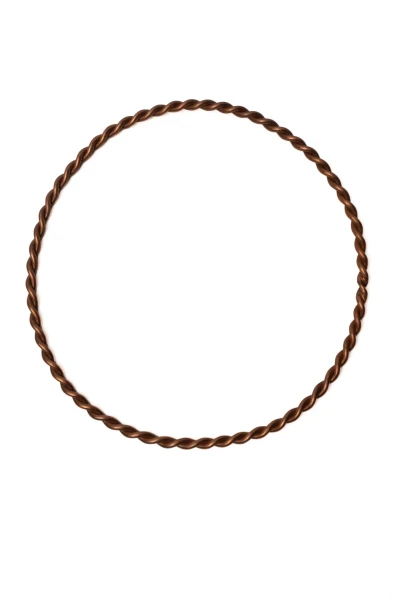
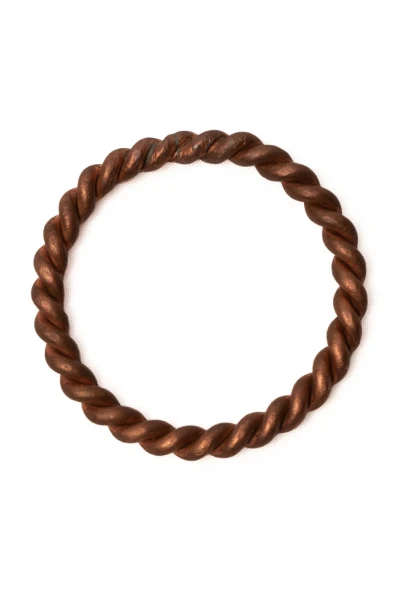
Tensor rings are small coils of copper wire that can be worn on a finger, placed under a glass of water or held in the hand during meditation. In this category you will find the Galactic Cubit Tensor Ring 4 mm, its 1/3 version, the Double Lost Cubit and the Double Royal Cubit. A ring is the simplest and most personal form of tensor: always close, always at hand.
Where tensor rings come from
The story of tensor rings begins in the 1990s in the United States. The American researcher and inventor Slim Spurling created the first Light-Life Rings: coils of copper wire whose length corresponds to ancient cubit measures. Spurling believed that such rings bring order to the energy of their surroundings. His work was developed by the Canadian Maurice Godfrey, who named them tensor rings, described further cubit measures and popularised them around the world.
How tensors are described by their makers
Slim Spurling and Maurice Godfrey described the tensor ring as a tool that creates a toroidal vortex around itself, a field of energy circulating in the shape of a torus. In their tradition it is said that such a vortex brings order to and harmonises the energy of the surroundings, and that water placed on the ring takes on, in their words, a softer taste and a more "living" structure. The makers also told of plants that were said to grow more lushly near tensors, and of people who wear tensors to feel more calm, balance and vitality. Many people who work with tensors describe similar sensations.
This is a description of the tradition and of the experiences of the makers and users of tensors, not a promise of effect. Science has not confirmed these descriptions, and everyone experiences working with a tensor in their own way.
The cubit: the sacred measure of antiquity
The cubit is one of the oldest measures of length, based on the length of the forearm from the elbow to the fingertips. The Egyptian royal cubit, about 52.4 cm, was the basis for building pyramids and temples, and its standards in granite and wood were kept in temples as sacred objects. In the tradition of working with tensors each cubit measure has its own character: the Royal Cubit is associated with harmony and order, the Galactic Cubit with manifestation and grounding, the Lost Cubit with transformation and discovery, the Empowerment Cubit with strengthening, the Viking Cubit with strength and courage, the Ra-Mu Cubit with memory and essence, the Phi Cubit with the golden ratio, and the New Earth Cubit with a new beginning. The MHz values given by the makers are their way of labelling the individual measures in this tradition.
The torus: a shape nature knows
A tensor ring has the shape of a torus, a solid resembling a ring doughnut. The torus is one of the most fascinating shapes in nature and science. The lines of the Earth's magnetic field arrange themselves around the planet in a shape close to a torus, vortices of air and water take the form of rings, and in tokamak reactors, built since the 1950s, hot plasma is held precisely in a toroidal chamber. In esoteric tradition the torus is a symbol of the flow of energy that comes out of the centre, circles the whole and returns to the source.
Copper: the metal of the ancients
Our tensors are made of copper, sometimes combined with brass or silver. Copper was one of the first metals that people learned to work, over 9,000 years ago. Its Latin name cuprum comes from Cyprus, an island famous in antiquity for its copper mines and dedicated to the goddess Aphrodite, whose symbol was a copper mirror. In Ayurveda water has been kept in copper vessels for centuries, a tradition called tamra jal.
What scientific research says. Scientists have studied the properties of copper surfaces for years. A review published in Applied and Environmental Microbiology (Grass, Rensing and Solioz, 2011) described how bacteria die within a few hours on surfaces of metallic copper, and in the study by Sudha and colleagues (2012) water kept overnight in a copper vessel no longer contained live bacteria. These are findings of research on copper; we describe them as scientific curiosities, not as a promise of effect of the tensors.
How to work with a tensor
In the tradition of working with tensors the ring is placed under a glass or jug of water, set among plants, worn on a finger, wrist or neck, or held in the hands during meditation. For many people a tensor is a daily reminder of their intention. It is best to start with one ring and one fixed place at home, for example beside the water you drink in the morning.
How to care for tensors
Copper naturally darkens over time; this is normal. Wiping it with lemon juice and a little salt or vinegar, then rinsing and drying with a soft cloth, brings back its shine. Clean silver with a soft silver cloth.
Frequently asked questions
How do the individual cubits differ? In the length of the coil and the traditional intention associated with it. Choose the one whose description moves you most.
Copper or silver? Copper is the traditional material, warm in colour and darkening over time. Silver is lighter and more elegant for everyday wear.
If you are allergic to copper or nickel, do not wear the tensor directly on the skin. Tensors are not a medical device.