





Kambo is the dried skin secretion of the Amazonian tree frog Phyllomedusa bicolor, held in respect by several peoples of the western Amazon: the Matsés, Katukina, Yawanawá, Kaxinawá (Huni Kuin) and Kanamari. In their world kambo is more than a substance. It is a gift of the forest and a teacher of hunters, restoring strength, alertness and luck in the hunt. Songs, rites and stories passed down from generation to generation have grown up around it.
What is kambo?
Phyllomedusa bicolor is a large, bright green tree frog with a white belly and a calm temperament. It lives in the treetops above Amazonian rivers, and at night its voice carries far through the forest. The secretion produced by its skin protects it in nature. For centuries the peoples of the Amazon have gathered it in a particular way: the frog is caught at dawn, a little of its secretion is gently collected, and then it is released back onto its tree, alive and unharmed. The secretion is spread on thin wooden sticks, where it dries.
The name "kambô" comes from the Pano languages. The Matsés and other peoples have their own words for it. In Brazil the name "vacina do sapo", "the frog's vaccine", is also used, and in Peru simply "sapo".
Kambo in the life of hunters
For the forest peoples, hunting is not only about getting food but also about a relationship with the forest and its spirits. When a hunter comes back empty-handed, it is said that panema has caught him: bad luck, a weight that takes his fortune away. Kambo is the answer to panema. In Matsés and Katukina tradition hunters received kambo to regain strength, sharpen their senses and become "light" for the forest again. It is said that after the rite game comes out to meet the hunter of its own accord, and hunting dogs pick up the trail more easily.
Kambo was received before a hunting expedition, but also when someone felt heavy, irritable or sunk in sadness. The rite was a way of "cleansing" in the sense the forest peoples understand it: shedding a weight and returning to harmony with the community and with nature.
The kambo rite in tradition
In Amazonian villages the kambo rite usually takes place at dawn, before the sun rises. It is led by an experienced person: a pajé, an older hunter or someone to whom the community has entrusted this knowledge. Song, intention and focus accompany it. The rite has its own rhythm: preparation, the encounter with the frog's strength, silence and rest. Afterwards comes calm, lightness and a sense of renewal.
What matters is that in tradition nobody received kambo by chance or in a hurry. The elders decided who was ready, and knowledge of the rite passed from hand to hand over years. This respect for tradition is the best guide today as well.
The spirit of the frog and the story of the shaman Kampu
The Katukina tell that long ago their people went through a hard time: hunters came back empty-handed and people lost their strength. A shaman named Kampu entered a deep trance to ask the spirits of the forest for help. Then the Mother of the Forest appeared to him, brought him the frog and taught him how to receive its gift. Kampu passed this knowledge on to his people. When he died, his spirit came to live in the forest, and the frog bears his name. That is why, when people sing during the rite today, they call on Kampu. We have gathered more stories like this in our article kambo: legends and stories of the Amazonian peoples.
Kambo, sananga and Rapé
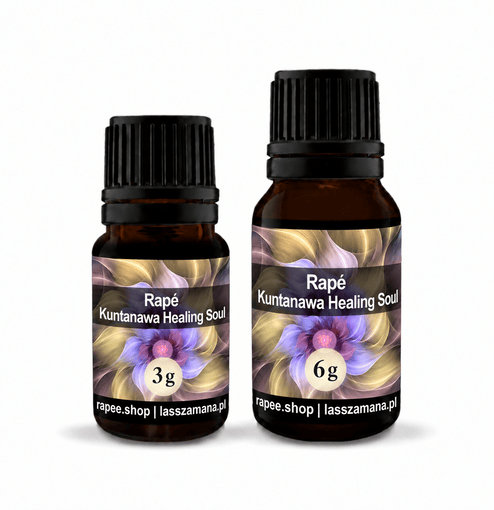
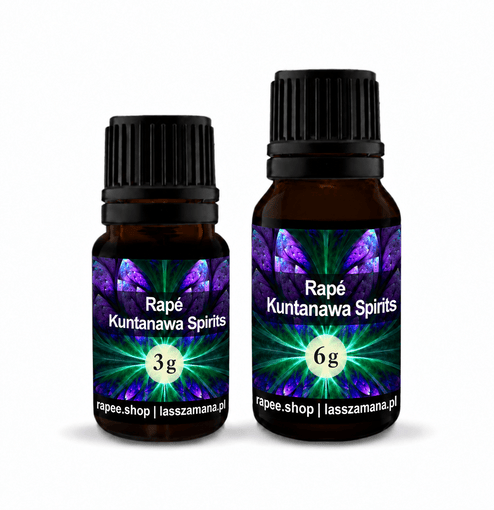
These three traditions often appear side by side, because they grow out of the same region of the Amazon and the same hunting culture. Each is different, however. Kambo comes from a frog, sananga is drops made from the root bark of Tabernaemontana shrubs, and Rapé is a ceremonial powder which in tradition is given as hapé. All three are joined by the conviction that the forest is a teacher, and that a person who listens to it becomes more attentive.
Kambo at Las Szamana
In our shop we treat kambo with respect for the peoples it comes from. Kambo Matsés is the secretion dried on a wooden stick, with a stated origin. We sell this product only to practitioners who work with kambo in the traditional way. Kambo is neither a medicine nor a supplement.
The kambo frog is also an important symbol in Amazonian art. See our hand-carved kuripes with the kambo frog motif, in which artisans capture its shape and character.
Kambo is stored in a dry, dark place, away from moisture and heat, ideally in an airtight container. It is worth labelling it with its date and origin, as is done in ethnobotanical collections.
Kambo through the eyes of scientists
The hunters' tradition also caught the interest of science. The team of the Italian pharmacologist Vittorio Erspamer of La Sapienza University in Rome studied the "sapo" used by the Matsés of northern Peru. In a paper published in 1993 in the journal Toxicon, the researchers described how the Matsés turn to it in shamanic rites, above all to call up luck in hunting. They also described what the hunters speak of: a surge of strength, sharpened senses and greater resistance to hunger and thirst during long expeditions deep into the forest.
The skin of the green frog turned out to be a true treasury of nature. Erspamer's team discovered in it a family of unique peptides, named deltorphins, and described them in 1989 in the Proceedings of the National Academy of Sciences. Since then the peptides of Phyllomedusa frogs have been studied by laboratories around the world. It is a beautiful example of how the knowledge of Amazonian hunters opened new doors for scientists.
Kambo is received only under the guidance of an experienced practitioner. If you are pregnant or breastfeeding, or take medication regularly, consult a doctor beforehand.
Frequently asked questions about kambo
What is kambo?
It is the dried secretion of the Amazonian frog Phyllomedusa bicolor, held in respect by the Matsés, Katukina, Yawanawá and Kaxinawá as a gift of the forest and a teacher of hunters.
Is the frog harmed?
No. In tradition the frog is caught at dawn, a little of its secretion is collected, and it is released back onto its tree, alive and unharmed.
What is panema?
Bad luck or a weight which, according to the Amazonian peoples, takes the hunter's fortune away. In tradition kambo lifts this panema.
Who leads the kambo rite?
In tradition the rite is led by a pajé, an older hunter or a person to whom the community has entrusted this knowledge.
Can anyone buy kambo from Las Szamana?
We sell kambo only to practitioners who work with it in the traditional way.
Sources
- Lima, E. C. de, Labate, B. C. (2007). "Remédio da ciência" e "remédio da alma": os usos da secreção do kambô (Phyllomedusa bicolor) nas cidades. Ponto Urbe, 1.
- Gorman, P. (1993). Making Magic. Omni, 15(9).
- Romanoff, S. A. (1984). Matses Adaptations in the Peruvian Amazon. Columbia University (doctoral dissertation).
- Erspamer, V. et al. (1993). Pharmacological studies of "sapo" from the frog Phyllomedusa bicolor skin: a drug used by the Peruvian Matses Indians in shamanic hunting practices. Toxicon, 31(9), 1099-1111.
- Erspamer, V. et al. (1989). Deltorphins: a family of naturally occurring peptides with high affinity and selectivity for delta opioid binding sites. Proceedings of the National Academy of Sciences, 86(13), 5188-5192.