








Sananga is a traditional preparation of drops made by several peoples of the western Amazon from the root bark of shrubs of the genus Tabernaemontana. In the cultures of the Huni Kuin (Kaxinawá), Yawanawá, Katukina, Nukini and Kuntanawa, sananga is linked with hunting, with "opening the sight" and with a rite in which a guardian places the drops into the eyes of another person. Its intense burning is characteristic, and in tradition it is not a flaw but the very essence of the experience. At Las Szamana sananga has the status of an ethnobotanical object, and this text describes its culture, not any health use.
What is sananga?
Sananga is a liquid extract of the root bark of Tabernaemontana shrubs that grow in the forests of the Brazilian and Peruvian Amazon. Each people has its own recipe and its own customs of harvesting. The finished drops usually range in colour from straw to amber and are sealed in small bottles with a dropper.
The name "sananga" comes from the Pano languages. In Europe people often simply speak of "sananga drops" or "Amazonian eye drops", but it is worth remembering that sananga is not a registered ophthalmic preparation. It is a ceremonial object, rooted in a particular tradition.
Where does sananga come from?
The best-described tradition of sananga belongs to the peoples of the Juruá and Purus river basins in the Brazilian state of Acre. Huni Kuin and Katukina hunters traditionally used the drops before a hunt. It was believed that sananga "opens the sight", making it easier to notice movement in the dense forest, and that it lifts panema. That is the regional name for bad luck, a weight or a blockage that sends a hunter home from the forest empty-handed.
Over time sananga also came to accompany community gatherings and rites. We tell the history of sananga, from the Pano hunters to European circles, in our article the history of sananga.
Sananga in the rite
In tradition the drops are given by the guardian of the rite: an older family member, a pajé or someone the community trusts. The person receiving them sits or lies with the head tilted back, and the guardian places a drop into each eye. The burning usually lasts a short while and is experienced as a moment of cleansing and focus. It is accompanied by silence, song or words of intention.
In Amazonian cultures sananga is not spoken of as a product from a shelf, but as a being with a character of its own, with which one enters into a relationship. That is why attitude matters so much: calm, respect and intention. We describe the details of the rite in our article the sananga ceremony.
Types of sananga and tribal lines
Sanangas differ above all in the line they come from and in their intensity. The word "Forte" marks a stronger version of the recipe. At Las Szamana you will find, among others:
- Kuntanawa Sananga Forte, from the tradition of the Kuntanawa people of the Tejo river,
- Nukini Sananga Forte, from the tradition of the Nukini people.
We have gathered the whole range in our sananga category.
Sananga, Rapé and kambo: how do they differ?
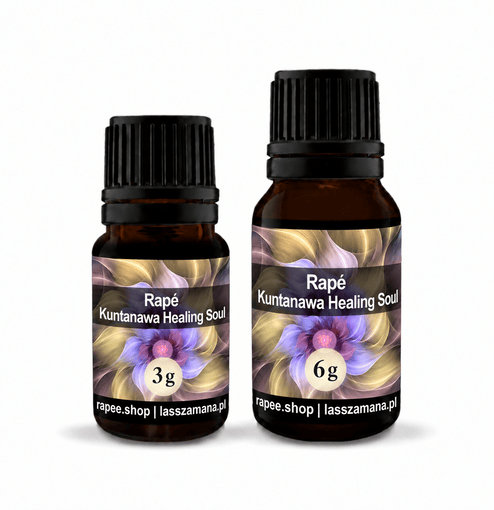
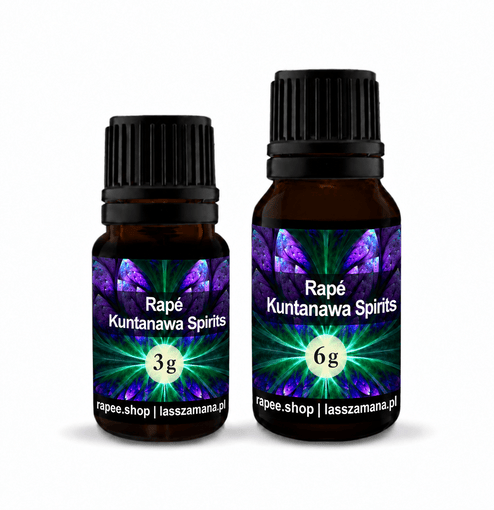
These three traditions often appear side by side, because they come from the same region of the Amazon. They are, however, three completely different practices. Sananga is drops. Rapé is a ceremonial powder which in tradition is given as hapé through a kuripe or a tepi. Kambo is connected with the secretion of the Phyllomedusa bicolor frog and has its own, separate rite. What joins them is context: all three grow out of hunting culture and the conviction that the forest teaches people attentiveness.
How to choose and store sananga
- Origin. A good description names the people and the region the recipe comes from.
- Batch date. Sananga is a plant extract and loses its character over time. It is good to know when it was made.
- A clear description. Be wary of sellers who promise effects of sananga on eyesight or on illness. Tradition speaks of a rite, not of treatment.
- Storage. Keep the bottle tightly closed, in a cool and dark place, out of reach of children. It is a personal object, so it is not lent to others.
It is best to start with one line and get to know its story before reaching for the next. Each sananga tells of a different people.
If you have an eye condition, are pregnant or breastfeeding, or take medication regularly, consult a doctor before use.
Sananga through the eyes of ethnobotanists
In Brazil sananga has a beautiful name: colírio da floresta, "the drops of the forest". In a review devoted to the shrub Tabernaemontana sananho, researchers from Brazil's Oswaldo Cruz Foundation (Fiocruz) described how its use travelled from Amazonian villages to big cities. They also explained the source of its characteristic burning: the plant contains an alkaloid with an irritating effect. In this way science confirms what the forest peoples have long known: the burning is a natural feature of sananga, not an accident.
In 2019 the Brazilian anthropologist Oliveira described Rapé and sananga as "mediations" between villages and cities, practices that build bridges between the world of the Amazonian peoples and city dwellers seeking contact with the forest. Today sananga is one of the most recognisable gifts of this culture.
Frequently asked questions about sananga
What is sananga?
Traditional drops made from the root bark of Tabernaemontana shrubs, prepared by the peoples of the western Amazon and used in rites and before hunting.
Why does sananga burn?
Burning is a characteristic feature of sananga. In tradition it is regarded as the essence of the experience and a symbol of cleansing, not as a flaw.
What is panema?
A term for bad luck or a weight which, according to the Amazonian peoples, takes the hunter's fortune away. In tradition sananga lifts this panema.
Is sananga an eye medicine?
No. Sananga is neither a registered ophthalmic preparation nor a medicine. At Las Szamana it has the status of an ethnobotanical object.
How does Sananga Forte differ from regular sananga?
The word Forte marks a stronger, more intense version of a given line's recipe.
Sources
- Schultes, R. E., Raffauf, R. F. (1990). The Healing Forest: Medicinal and Toxic Plants of the Northwest Amazonia. Dioscorides Press.
- Lagrou, E. (2007). A fluidez da forma: arte, alteridade e agência em uma sociedade amazônica (Kaxinawa, Acre). Topbooks.
- Secretariat of the Convention on Biological Diversity (2010). Nagoya Protocol.
- Oliveira, A. F. (2019). Rapé e Sananga: medicinas e mediações entre aldeias e centros urbanos. In: Labate, B. C., Goulart, S. L. (eds.), O uso de plantas psicoativas nas Américas. Gramma/NEIP, 261-280.
- Etnobotânica da planta Tabernaemontana sananho Ruiz & Pavon (Apocynaceae): revisão integrativa. Revista Fitos, Fiocruz. revistafitos.far.fiocruz.br