





Sananga is a traditional liquid preparation of the peoples of the western Amazon, made from the root bark of shrubs of the genus Tabernaemontana (the dogbane family, Apocynaceae). Two things should be separated right away: the Brazilian sananga of the Pano peoples is a specific preparation from the root, whereas the Peruvian word sanango in the vegetalismo tradition refers to a whole group of different plants, not always related to Tabernaemontana. The history of sananga therefore leads to two intertwined stories: one about the plant and one about the people who gave it meaning.
What is sananga and where does its name come from?
In the Pano languages, spoken among others by the Yawanawá, Huni Kuin (Kaxinawá) and Noke Koi (Katukina), the names of this preparation vary, and the form "sananga" took hold mainly in the Portuguese of the state of Acre and in the language of people from outside the Amazon. The kinship with the Peruvian "sanango" is visible, but it is not the same concept. In Peru "lobo sanango" is sometimes identified with Tabernaemontana sananho, while "chiric sanango" is a completely different plant, Brunfelsia grandiflora of the nightshade family.
For the reader this difference has practical meaning: when the word "sanango" appears in sources, check the Latin name before linking a description to Brazilian sananga.
Which plants lie behind sananga?
The species most often named are Tabernaemontana undulata and Tabernaemontana sananho, small understorey shrubs with milky sap and white, star-shaped flowers. The genus Tabernaemontana is large and spread across the tropics of the whole world. An extensive 1984 monograph by van Beek and colleagues describes its taxonomy and rich chemistry: these plants contain numerous indole alkaloids, which explains why many cultures treated them with great care.
The classification of this genus has been revised more than once, and synonymous names have circulated in the literature for decades. Databases such as Plants of the World Online, run by the Royal Botanic Gardens, Kew, help establish which name is accepted today.
The history of sananga: how did the Pano peoples pass on this knowledge?
Knowledge of sananga was not written down by its guardians. It was passed on by word of mouth, within families and groups of hunters, often together with songs and stories about the beginnings of the world. Among the Matsés, a people living by the Javari river on the border of Peru and Brazil, plant preparations for the eyes belonged to a wider set of hunting practices, alongside the secretion of the Phyllomedusa bicolor frog, known as kambô.
Among the Yawanawá and Huni Kuin, sananga belongs to a circle of traditional tools and preparations, alongside Rapé and ayahuasca. Ethnographic records from the 20th century are sparse, and most of what we know today comes from the accounts of the communities themselves, which since the 1990s have spoken more and more openly about their heritage. The exact age of this tradition is unknown. People speak of "generations", not dates.
Why did hunters link sananga with panema?
The key to understanding sananga lies in the word panema. In 1951 the Brazilian anthropologist Eduardo Galvão described it as a widespread Amazonian belief in "spoiled luck": a state in which a hunter returns from the forest empty-handed because something has disturbed his relationship with the animals and spirits of the forest. Panema can come from envy, a broken taboo or improper behaviour towards hunted prey.
In this world sananga was understood as a way to lift panema and regain the hunter's sharpness. Communities believed that the preparation let the hunter see movement better in the half-light of the forest and return to balance with his surroundings. This is above all a description of a cosmology, not a promise of an effect: sananga belonged to a social and spiritual order in which getting food was a matter for the whole community.
What did traditional preparation of sananga in the village look like?
According to accounts from Acre and the Javari valley, the root was dug up and cleaned of soil, and then its bark was scraped off. The scrapings were mixed with water and squeezed through cloth or plant fibre, giving a cloudy, amber liquid. It was therefore a simple water extract, usually prepared just before use, without preservatives.
In many villages, harvesting the root was preceded by addressing the plant, and people went into the forest observing certain taboos. This ceremonial layer is as important as the technique itself. It shows that preparing sananga was a form of relationship with the forest, not merely a technical task.
When did sananga travel beyond the Amazon?
From the beginning of the 21st century, communities such as the Yawanawá began organising open cultural festivals in their villages, inviting guests from Brazil and abroad. With this openness Rapé, kambô and sananga began to travel to Europe and North America, often in the hands of people who had come to know them personally in the Amazon.
This path has two sides. On the one hand it allowed the Pano peoples to gain recognition and resources to protect their territories. On the other it meant that a preparation taken out of its context is sometimes described with exaggeration. Botanists and ethnographers such as Richard Evans Schultes in "The Healing Forest" remind us that Amazonian plants must be read in the context of the culture that knows them, not through fashionable slogans.
How does Las Szamana approach sananga in its collection?
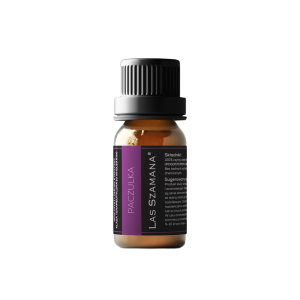
In our shop sananga is presented as an ethnobotanical and collectible object. It is not intended for consumption or for application, and the product descriptions contain no instructions for use. What interests us is the origin, the Latin name of the plant, the people a given tradition is connected with, and how to store the bottle: cool, in a dark place, tightly closed.
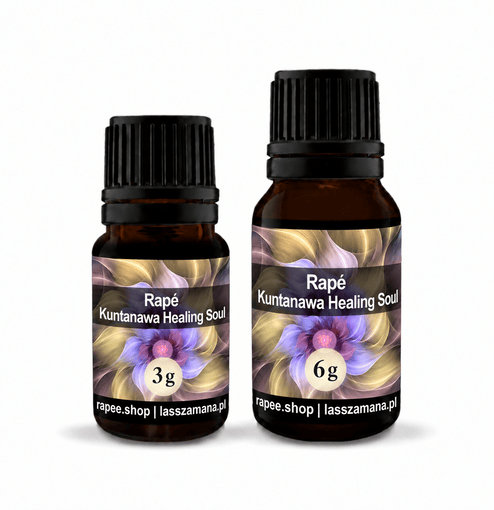
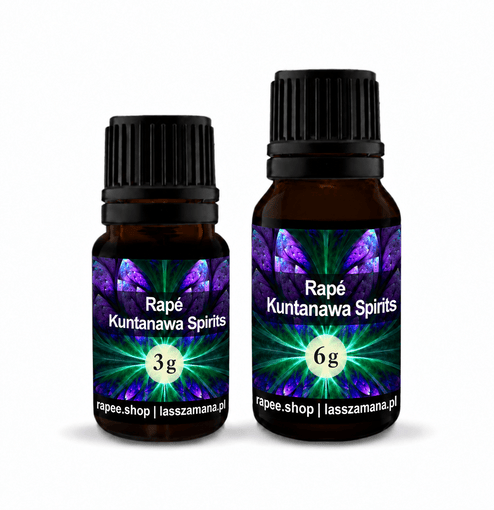
If you want to see what sananga looks like in our range, visit the sananga in the Las Szamana collection page. You will find there, among others, Kuntanawa Sananga Forte and Nukini Sananga Forte, and the wider circle of Amazonian ethnobotany is shown by our ceremonial Rapé and kuripe and tepi. We describe each of them with knowledge in mind, not promises.
Sananga through the eyes of ethnobotanists
In Brazil sananga has a beautiful name: colírio da floresta, "the drops of the forest". In a review devoted to the shrub Tabernaemontana sananho, researchers from Brazil's Oswaldo Cruz Foundation (Fiocruz) described how its use travelled from Amazonian villages to big cities. They also explained the source of its characteristic burning: the plant contains an alkaloid with an irritating effect. In this way science confirms what the forest peoples have long known: the burning is a natural feature of sananga, not an accident.
In 2019 the Brazilian anthropologist Oliveira described Rapé and sananga as "mediations" between villages and cities, practices that build bridges between the world of the Amazonian peoples and city dwellers seeking contact with the forest. Today sananga is one of the most recognisable gifts of this culture.
Frequently asked questions about sananga
Are sananga and sanango the same plant?
Not always. The sananga of the Pano peoples is made from the root of Tabernaemontana, while the Peruvian "sanango" is a collective name for several different plants, including Brunfelsia grandiflora.
Which peoples are most often associated with sananga?
The ones most often named are the Matsés, Yawanawá, Huni Kuin (Kaxinawá) and Noke Koi (Katukina), peoples speaking languages of the Pano family in the western Amazon.
What does the word panema mean?
It is an Amazonian concept describing the loss of hunting luck. Sananga was traditionally linked with an attempt to restore the hunter's balance with the forest.
How long ago did the sananga tradition arise?
There is no reliable date. The tradition is passed on orally and described as many generations old, and written documentation of it appeared relatively late.
Is sananga from Las Szamana intended for use?
No. We offer it as an ethnobotanical and collectible object that is not intended for consumption.
Sources
- Van Beek T. A. et al., "Tabernaemontana L. (Apocynaceae): a review of its taxonomy, phytochemistry, ethnobotany and pharmacology", Journal of Ethnopharmacology, 1984.
- Schultes R. E., Raffauf R. F., "The Healing Forest: Medicinal and Toxic Plants of the Northwest Amazonia", Dioscorides Press, 1990.
- Galvão E., "Panema: uma crença do caboclo amazônico", Revista do Museu Paulista, 1951.
- Luna L. E., "The concept of plants as teachers among four mestizo shamans of Iquitos, northeastern Peru", Journal of Ethnopharmacology, 1984.
- Plants of the World Online, Royal Botanic Gardens, Kew, entries for the genus Tabernaemontana.
- Oliveira, A. F. (2019). Rapé e Sananga: medicinas e mediações entre aldeias e centros urbanos. In: Labate, B. C., Goulart, S. L. (eds.), O uso de plantas psicoativas nas Américas. Gramma/NEIP, 261-280.
- Etnobotânica da planta Tabernaemontana sananho Ruiz & Pavon (Apocynaceae): revisão integrativa. Revista Fitos, Fiocruz. revistafitos.far.fiocruz.br