









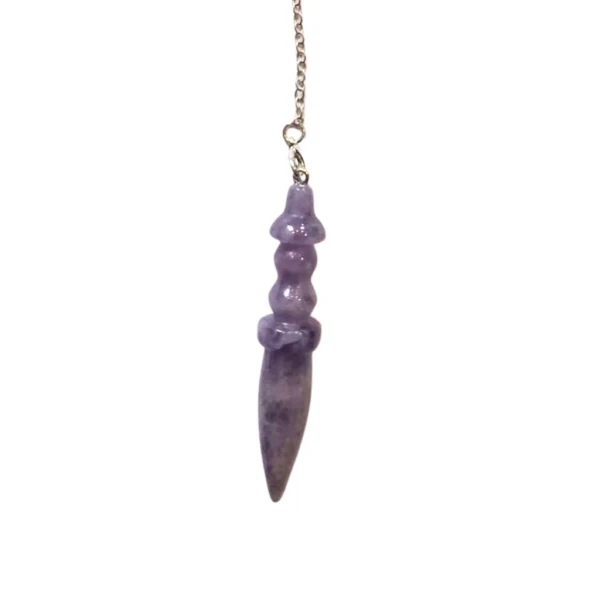
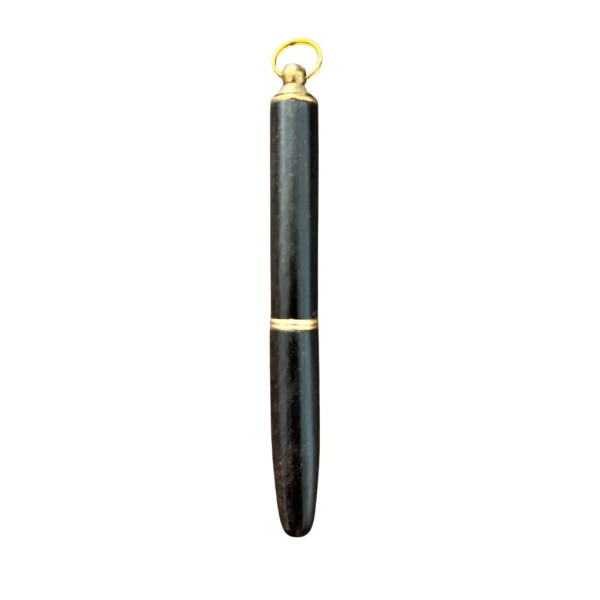
A dowsing tensor is a dowser's hand tool: a thin, springy wire or rod ending in a loop or a weight, set in a handle. Held in the hand, it oscillates up and down, swings from side to side or draws circles. It is worth distinguishing it straight away from tensor rings, closed loops of copper that are laid down or worn. A dowsing tensor is a tool for asking questions, while a tensor ring is an object to wear. All they share is a word and a fascination with a field that cannot be seen.
Where did the dowsing tensor come from?
Dowsing is as old as mining. In 1556 Georgius Agricola described in De re metallica miners who searched for ore veins with forked twigs in their hands. Over the following centuries dowsers pointed out places for wells, and in the 20th century French clergymen such as Abbé Alexis Bouly popularised the word "radiesthesia" itself.
The tensor is a younger relative of the rod and the pendulum. In the second half of the 20th century springy dowsing tools, called biotensors, spread in Germany, and alongside them the Lecher antenna, modelled on the arrangement of wires described in 1888 by the Austrian physicist Ernst Lecher. Dowsers appreciated that a springy wire responds to the slightest movement of the hand and shows it clearly, while fitting in a pocket.
How do dowsers explain the movement of the tensor?
In the dowsing tradition a person perceives subtle radiation from the earth, water, plants and places, and the tool is a pointer that makes this sensitivity visible. The movement of the rod is a response of the dowser's body, not of the wire itself. As early as 1852 the British physiologist William Carpenter described how thought and expectation can produce small, unconscious muscle movements. Dowsers see in this a bridge between intuition and the body: the tensor shows what the body knows before the mind does.
This is why calm, a quiet mind and a clearly asked question matter most in this practice. The same tensor moves quite differently in the hands of an agitated person and a calm one.
What does working with a tensor look like?
- Setting the answers. Before you ask your first question, check how your tensor shows "yes" and "no". For many people "yes" is an up-and-down movement and "no" a side-to-side one, but everyone establishes this for themselves.
- One question at a time. The question should be short and clear, one that can be answered "yes" or "no".
- A loose grip. Hold the handle lightly, without clenching your fingers, with your elbow resting against your body.
- Silence and breath. A few calm breaths before the question help to separate intuition from wishing.
Dowsers use the tensor to choose a place for a home altar, to work with stones, plants and oils, and in meditation, as a tool for a conversation with their own intuition.
The tensor in daily practice
It is best to begin with a few minutes of silence and a practice journal. Write down what you asked, how the tensor moved and how you felt at the time. After a few weeks you will see your own rhythm and learn to tell calm intuition from hasty expectation.
Many people combine work with the tensor with other tools. We write about dowsing and ritual wands in the article wands: types, choosing one and practice, and about the symbolism of shapes in the article sacred geometry in shamanism.
How to care for a tensor
Wipe the wire with a dry, soft cloth and keep the tensor in a case so that it does not bend. In the dowsing tradition the tool is cleansed after work with the smoke of palo santo or laid overnight on a stone, for example on shungite.
Frequently asked questions
How does a tensor differ from a pendulum?
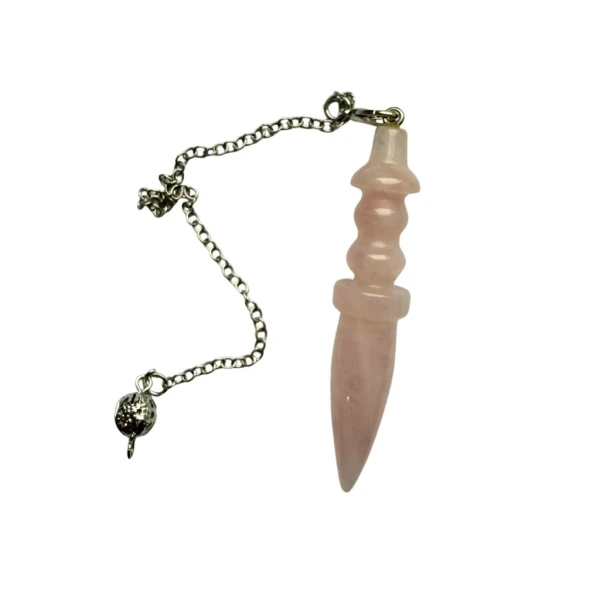
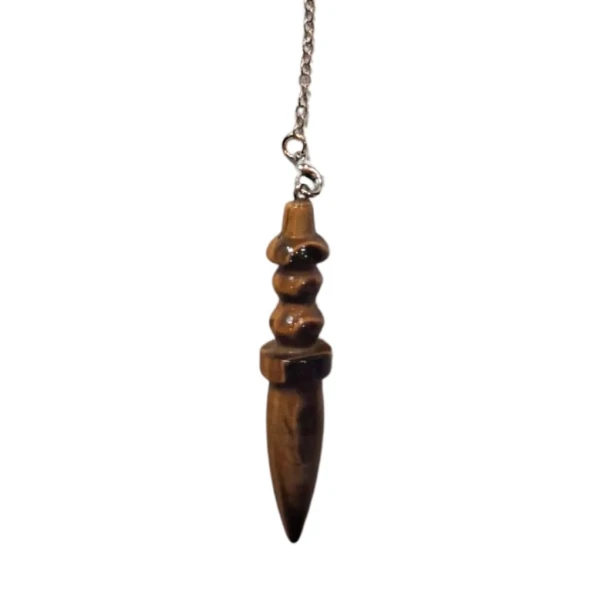
A pendulum hangs freely on a thread or chain and draws circles. A tensor is set in a handle and oscillates on a springy rod, so it responds faster and can be used while moving.
Is a dowsing tensor the same as a tensor ring?
No. A tensor ring is a closed loop of copper that is worn or laid down. A dowsing tensor is a tool held in the hand while working with questions.
Can anyone work with a tensor?
In the dowsing tradition it is said that everyone has sensitivity, and practice develops it. What matters most are patience and regularity.
Sound, stone and geometry at Las Szamana
For centuries sound, stone and shape have ordered space and attention. Also read our other articles:
- Tibetan singing bowls
- Crystal bowls 432 Hz
- Tuning forks: Solfeggio, 528 Hz and OM
- Sacred geometry in shamanism
- Shungite: the stone from Karelia
- Shungite pyramids
Our shungite and sacred geometry: Polished pyramid, Raw pyramid, Sphere, Cube, Merkaba, Flower of Life plate, Elite shungite, Shungite filter, Sacred Geometry medallion. You will find the whole collection in the Shungite category.
Sources
- Georgius Agricola, De re metallica, 1556, book II (description of the mining rod).
- William B. Carpenter, "On the influence of suggestion in modifying and directing muscular movement, independently of volition", Royal Institution of Great Britain, 1852.
- Ernst Lecher, "Eine Studie über elektrische Resonanzerscheinungen", Annalen der Physik, 1890.
- Evon Z. Vogt, Ray Hyman, Water Witching U.S.A., University of Chicago Press, 1959.