





A wand is a hand tool that appears in European tradition in two quite different roles. A dowsing rod, a forked twig in the shape of a Y or a pair of metal rods in the shape of an L, moves in the hands during so-called dowsing and is used for searching. A ritual wand, made of wood or crystal, does not move at all: it is an object of focus held in the hand during meditation, prayer or a quiet ritual. Before you choose yours, it is worth knowing which of these two families it belongs to, because that determines its shape, material and the way you will work with it.
Where did the wand come from, and why was it so often made of hazel?
The oldest well-documented description of a searching rod comes from the mining treatise De re metallica by Georgius Agricola, published in 1556. A woodcut shows miners walking along a slope with forked twigs in their hands.
In the folk culture of Central Europe, including the Polish lands, hazel (Corylus avellana) was the most common choice. It is a shrub growing at forest edges and along field boundaries, with flexible, springy shoots that easily form natural forks. Hazel held a special place in Slavic and Germanic beliefs: its twigs were tucked behind beams, put under thatch and associated with protecting the home. Willow and hawthorn appeared alongside it. People who walked the fields with a rod looking for a place to dig a well were called dowsers. The word "radiesthesia" itself is much younger and spread only in the first half of the 20th century, thanks to French clergymen fascinated by the practice.
What kinds of wands are there and how do they differ?
In shops and in tradition you will meet several forms. They differ in how they are held and in what they actually do in the hand.
- Y-shaped (forked) rod. The classic form from a hazel or willow twig, today also from flexible plastic. It is held by both arms, palms facing up, with slight tension. The movement is a sudden dip or lift of the tip.
- L-shaped (angle) rods. Two metal rods, most often of copper or brass, bent at a right angle. The shorter section is the handle, the longer one points the direction. Better models have rotating sleeves on the handles, so the rods move freely and do not rub against the skin. The movement is the rods crossing or spreading apart.
- Spring rod (single). One long, flexible rod, often with a weighted tip. It swings vertically or horizontally.
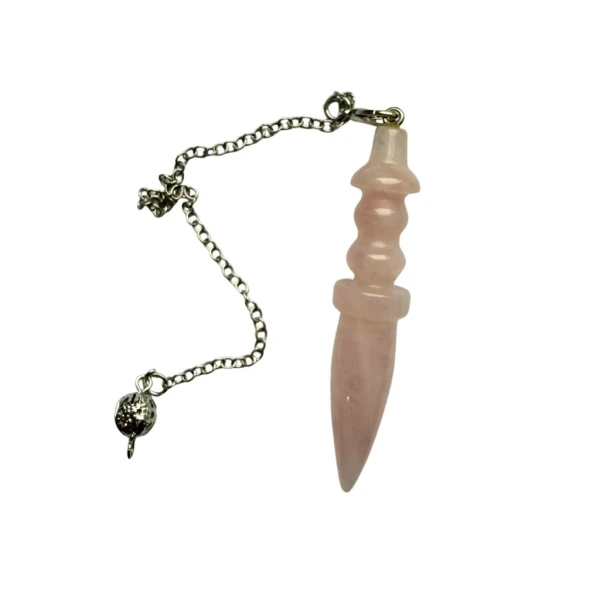
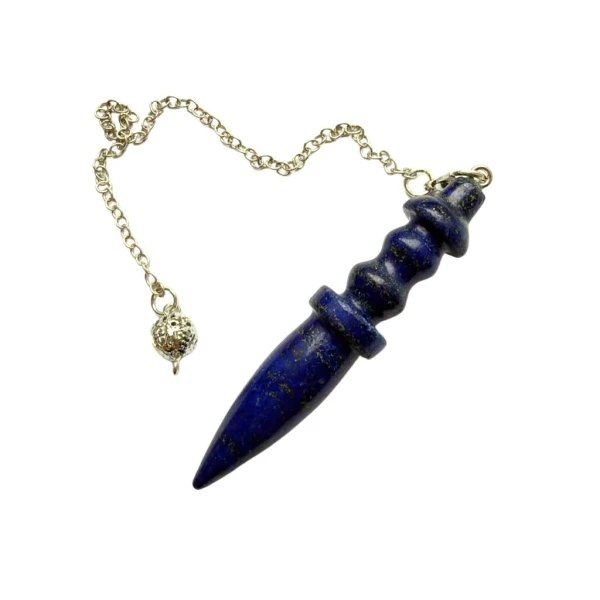
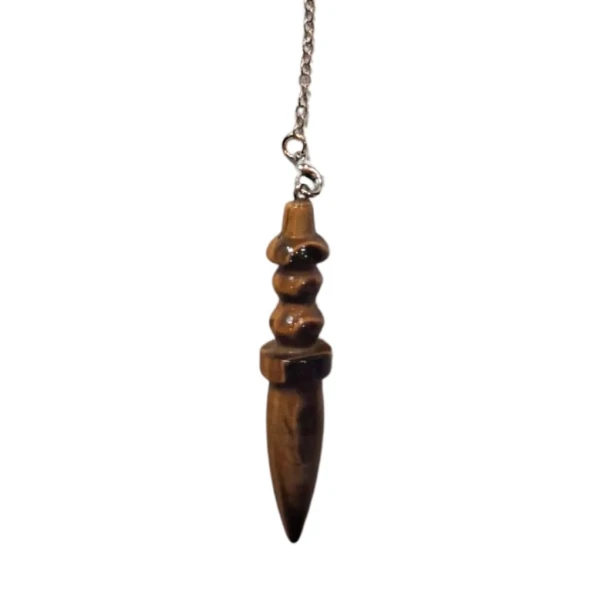
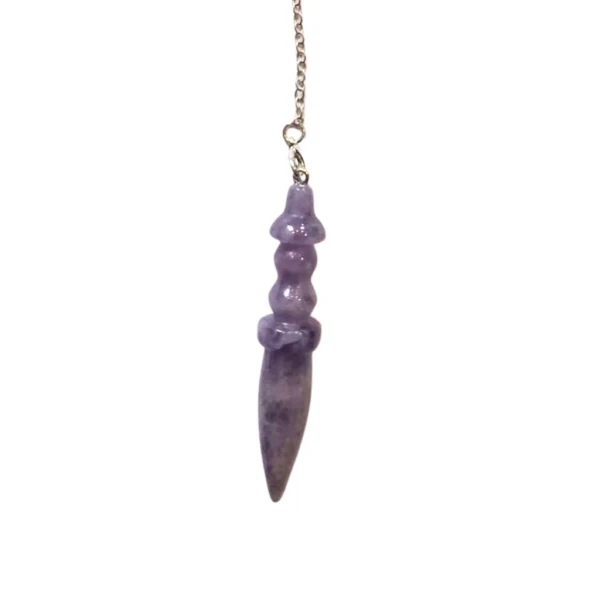
- Ritual wand. A turned stick of wood, a polished crystal (quartz, selenite, amethyst) or a combination of both. It has no moving parts and is not used for searching, but for focusing attention and marking the beginning and end of a moment of silence.
At Las Szamana you will find crystal ritual wands, that fourth family. Each bears the name of a zodiac sign and has a different stone, for example Sagittarius with clear quartz or Pisces with amethyst.
How do dowsers explain the movement of the rod?
Dowsing has a long history. Agricola, author of De re metallica, the first great handbook of mining, described miners searching for ore veins in this way. Over the following centuries dowsers were invited to look for water for wells, and in many Polish villages people still say that a well is best dug where the rod points.
In the dowsing tradition it is believed that a person perceives subtle radiation from the earth, water and places, and the rod acts as a pointer that makes this sensitivity visible. The movement of the rod is a response of the dowser's body, not of the tool itself. As early as 1852 the British physiologist William Carpenter described how thought and expectation can produce small, unconscious muscle movements. Dowsers see in this a bridge between intuition and the body: the rod shows what the body knows before the mind does.
This is why experienced dowsers stress that what matters most is calm, a quiet mind and a clearly asked question. The practice is best begun with a few minutes of silence and breathing, treating the rod as a tool of mindfulness and a conversation with your own intuition.
How to choose a wand: material, length and handle
With angle rods, balance matters most. A long arm of 30 to 40 centimetres and a handle about the width of the hand give a rod that does not tip over by itself in a breeze, yet is not heavy. Copper is soft and warm to the touch, darkens over time and develops a patina. Brass is harder and holds its shape longer. Sleeves on the handles are a convenience, not a necessity: without them the rods must be held very loosely.
A forked rod is best cut yourself or chosen ready-made from a flexible material. Fresh hazel stays springy for a few weeks, then dries out and breaks easily at the fork. If you cut a twig yourself, do it with respect: from a shrub with many shoots, with a clean cut, outside the bird nesting season, and preferably on your own plot or with the landowner's permission.
A ritual wand is chosen more with the hand than with the eye. What counts is the weight, the temperature of the material and whether it sits well in the hand during a few minutes of calm breathing. If you want to compare how the stone changes the character of a wand, set the calm Cancer with labradorite beside the warm Leo with tiger's eye. It is worth taking in hand the wand of your own sign, then one completely different, and listening to which sits better in your palm.
Morning or evening? Practice with a wand by time of day
Since the movement of the rod depends so strongly on the state of the body, the time of day matters. In the morning, before coffee and before scrolling the phone, the hands are usually calmer and thoughts less scattered. It is a good moment for a short practice of mindfulness lasting a few minutes: stand comfortably, relax your shoulders, take a few slow breaths and observe whether the rods stay still when you expect nothing. Such a morning "zero point" shows what your calm hand looks like.
In the evening the hands are tired, the forearm muscles tremble more often and the head is full of the whole day's matters. The rod then usually moves more easily and readily. Instead of treating this as a "stronger signal", treat it as information about your own tension. Many people use a ritual wand in the evening: a moment with a wooden or crystal object in the hand, a few breaths, the light switched off. It is a simple way to close the day.
A practice journal is a good habit. Write down what you asked, how the rod moved and how you felt at the time, morning and evening separately. After a few weeks you will see your own rhythm and learn to tell calm intuition from a hasty wish.
How to care for and store a wand
- Copper and brass: wipe with a dry, soft cloth. If you do not like the patina, a paste of lemon juice and salt is enough, followed by a thorough rinse and drying.
- Wood: rub with a drop of linseed oil or beeswax once every few months. Protect it from radiators and bathroom damp.
- Crystals: store separately, wrapped in cloth. Selenite is soft and does not like water, quartz will tolerate a gentle rinse.
- Hazel twigs: keep them in a cool place, and when they dry and lose their springiness, return them to the earth instead of throwing them in the bin.
A linen pouch or a wooden box works well for storage. Keep a crystal wand separately, so that the stone does not knock against other objects.
A wand, whatever its form, serves best when we know what it is: an old folk tool and an object of focus. Understood this way, it can become a calm companion of mornings and evenings, a reminder of the hazel at the forest edge and of the hands that for generations have searched the landscape for meaning.
Crystal wands at Las Szamana
Each of our wands bears the name of a zodiac sign and has its own stone: Aries with aquamarine, Taurus with citrine, Gemini with green strawberry quartz, Cancer with labradorite, Leo with tiger's eye, Virgo with agate, Libra with lapis lazuli, Scorpio with grey agate, Sagittarius with clear quartz, Capricorn with obsidian, Aquarius with red jasper, Pisces with amethyst. You will find the whole collection in the crystal wands category. If you enjoy working with copper, also see our article what are tensor rings.
Sources
- Georgius Agricola, De re metallica, 1556, book II (description and woodcut of the mining rod).
- William B. Carpenter, "On the influence of suggestion in modifying and directing muscular movement, independently of volition", Royal Institution of Great Britain, 1852 (the ideomotor effect).
- Evon Z. Vogt, Ray Hyman, Water Witching U.S.A., University of Chicago Press, 1959 (2nd ed. 1979).