






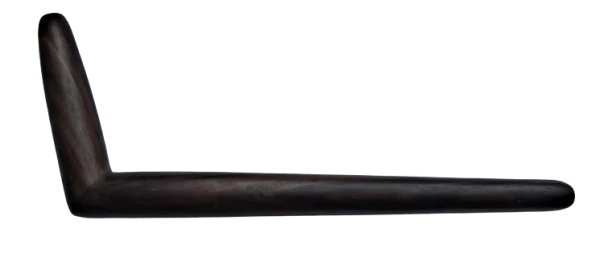
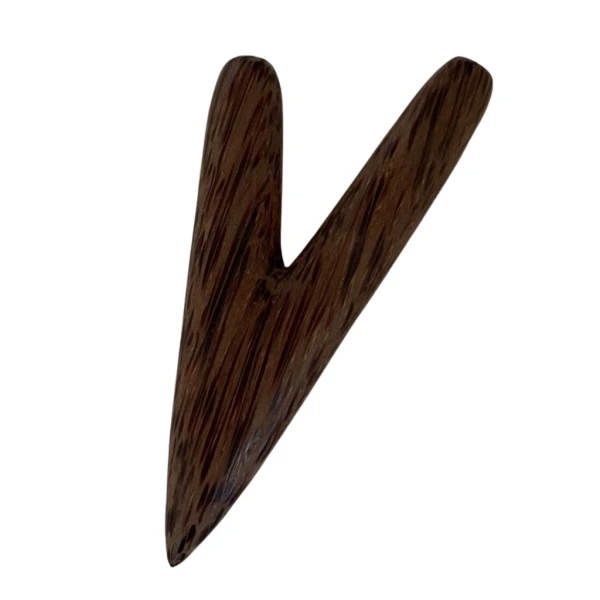
Chilcuague is the dried root of the plant Heliopsis longipes from the aster family, which grows wild in the mountains of central Mexico. Placed on the tongue, it causes a characteristic tingling, salivation and a brief feeling of slight numbness. The key distinction: chilcuague is always the root of one species, not a general name for all "tingling" plants. Acmella (Acmella oleracea), often confused with it in shops, is a different plant, from which mainly the flower heads are harvested.
What exactly is chilcuague?
Above ground Heliopsis longipes looks modest: a low perennial with small yellow flower heads resembling miniature sunflowers. The real treasure lies below the surface. The roots are thin, fibrous and of a warm golden-brown shade. They gave the plant its folk names: raíz de oro, the golden root, and raíz azteca, the Aztec root. In some villages it is simply called chilcuán.
The name "chilcuague" probably comes from the Nahuatl language and refers to pungency, like the word chilli. This pungency, however, is quite different from that of a chilli pepper. It does not burn, it sparkles, spreading across the tongue in a wave of tiny impulses.
Where does chilcuague come from and who harvests it?
The natural range of the species is surprisingly narrow. It covers above all the Sierra Gorda range, where the Mexican states of Guanajuato, Querétaro and San Luis Potosí meet. It is a land of limestone slopes, pine and oak forests and dry valleys, where the plant chooses spots at the forest edge.
For the people of these mountains the root has for generations been an ordinary household ingredient, sold in small bundles at local markets. This picture is close to the Polish herbal tradition. Just as rhizomes of sweet flag, elecampane root or angelica lay on our market stalls, bundles of the golden root lie on the stalls of the Sierra Gorda. Growing interest from outside the region led to wild stands being overharvested, which is why cultivation is developing in Mexico to take the pressure off natural populations.
Why does chilcuague tingle on the tongue?
The sensation comes from alkamides, plant compounds built from a fatty acid chain linked to an amine group. The most important of them in chilcuague root is called affinin. The same molecule appears in publications on Acmella as spilanthol. Different names, one compound: a frequent source of confusion in product descriptions.
Alkamides act on the nerve endings in the mouth, producing a sense of tingling, coolness and numbness. Lovers of Sichuan cuisine know a similar effect from Sichuan pepper, whose tingling compounds are also alkamides. In the botanical literature the root of Heliopsis longipes is regarded as one of the richest known natural sources of affinin.
How does chilcuague differ from Acmella?
Both plants belong to the aster family and both contain affinin, so they are easy to confuse. The differences, however, are clear:
- Species: chilcuague is Heliopsis longipes; Acmella is Acmella oleracea, formerly classified as Spilanthes.
- Part of the plant: chilcuague uses the root, Acmella mainly the flower heads and leaves.
- Origin: chilcuague is endemic to central Mexico; Acmella comes from South America and spread through the tropics as a leaf vegetable.
- Character of the sensation: the root usually gives a more intense and longer tingling than fresh Acmella flower heads.
If a product description says only "spilanthes" or "tingling plant", there is no certainty which species you are buying.
How was chilcuague used in Mexican tradition?
In the Sierra Gorda the root was above all a spice. It was added to salsa and to bean and meat dishes, where it brought a fresh, "electric" lift to the flavour, different from the heat of chilli. Historically it was also used in home care of the mouth: people of the region reached for it for gums and teeth as a simple ingredient known from their grandparents.
In local knowledge it also appears as an insect-repelling plant, which modern laboratory work on affinin treats as an interesting lead for research. In the Sierra Gorda, chilcuague thus remains above all a spice and a household ingredient for mouth care.
In what forms is chilcuague found?
Whole dried root
The form closest to the market tradition. It has the smallest surface in contact with the air, so it keeps its volatile alkamides and golden colour the longest.
Powder
Convenient in the kitchen, but it loses aroma and intensity faster. A good powder has a warm, beige-golden shade and a distinct scent.
Liquid extract
Several types of extract are found. A water extract is made from the root and water alone. A traditional tincture extract draws out above all compounds that dissolve well in fats, which include the alkamides. A dual extract combines both approaches. Extracts often state the ratio of raw material to liquid, for example 1:5, and in pharmacopoeia language also the DER, the ratio of the quantity of raw material to the quantity of extract obtained.
At Las Szamana you will find three versions of the liquid root extract: the classic Chilcuague Forte, Chilcuague MINTouch with a note of mint and Chilcuague CITRUSoul with a note of lemon. It is best to start with Forte to get to know the pure character of the golden root, and then reach for a flavoured version.
How to recognise good chilcuague?
- Latin name: it should read Heliopsis longipes. The common name alone is not enough.
- Part of the plant: the root, in Latin radix.
- Country of origin: Mexico, ideally with information on whether the raw material is cultivated.
- Type of extract: water, tincture or dual, together with the ratio of raw material to liquid.
- Look and smell: a golden colour and a fresh, slightly earthy aroma.
How to store chilcuague?
The root and powder are best kept in an airtight, dark jar, away from moisture and light. A liquid extract likes a cool place and a closed bottle of dark glass. Stored this way, the raw material keeps its character longer.
People sensitive to plants of the aster family, such as chamomile, arnica or calendula, may also react to chilcuague. The root is not intended for children.
What does research say about chilcuague?
Mexican scientists have for years been studying the root that the people of the Sierra Gorda have known for generations. In 1999 Jorge Molina-Torres's team examined affinin, the main alkamide of chilcuague, and compared it with capsaicin from chilli peppers. In laboratory cultures affinin inhibited the growth of the bacterium Escherichia coli and the yeast Saccharomyces cerevisiae at a concentration of just 25 micrograms per millilitre.
In 2010 researchers from the Autonomous University of San Luis Potosí (Cilia-López et al.) described in the journal Pharmaceutical Biology the action of a root extract and of affinin alone in an animal model. In mice both showed an analgesic effect comparable to ketorolac and a stimulating effect similar to caffeine. In the same year another Mexican team (Cariño-Cortés et al.) confirmed in the Journal of Ethnopharmacology the analgesic action of the extract in mice and found no DNA damage. These results show well why in Mexican tradition people have long reached for chilcuague for aching teeth and muscles.
Frequently asked questions about chilcuague
Is chilcuague the same as spilanthes?
No. "Spilanthes" is the common name of Acmella. Both contain the same alkamide, but they come from different species and different parts of the plant.
Is chilcuague hot like chilli?
It does not burn like a pepper. It gives a tingling and a cool sparkle, not a feeling of heat.
Does chilcuague grow in Poland?
Not in the wild. It is endemic to central Mexico, although it is sometimes grown as a curiosity in botanical gardens.
How do Forte, MINTouch and CITRUSoul differ?
All three are an extract of the root of Heliopsis longipes. Forte shows the pure, intense character of the golden root, MINTouch combines it with a cool note of mint, and CITRUSoul with the freshness of lemon. The choice is a matter of taste.
If you are pregnant or breastfeeding, or take medication regularly, consult a doctor before use.
The golden root at Las Szamana
Chilcuague extracts: Chilcuague Forte, Chilcuague MINTouch, Chilcuague CITRUSoul. You will find them all in the chilcuague category.
The golden root also goes into our ChilcAmbil® blends: Yawanawa, Shanenawa, Shawadawa Spiritual, Jaguar, Parika, Mapacho. We write about how ChilcAmbil differs from traditional ambil in the article Ambil vs ChilcAmbil®.
Sources
- Molina-Torres J., García-Chávez A., Ramírez-Chávez E. (1999). Antimicrobial properties of alkamides present in flavouring plants traditionally used in Mesoamerica: affinin and capsaicin. Journal of Ethnopharmacology, 64(3).
- Cilia-López V.G. et al. (2010). Analgesic activity of Heliopsis longipes and its effect on the nervous system. Pharmaceutical Biology, 48(2).
- Barbosa A.F. et al. (2016). Spilanthol: occurrence, extraction, chemistry and biological activities. Revista Brasileira de Farmacognosia, 26(1).
- European Pharmacopoeia (Ph. Eur.), general monograph "Extracts from herbal drugs" (0765): definition of the drug extract ratio (DER).
- Royal Botanic Gardens, Kew. Plants of the World Online, species page for Heliopsis longipes: powo.science.kew.org
- Cariño-Cortés R. et al. (2010). Antinociceptive, genotoxic and histopathological study of Heliopsis longipes S.F. Blake in mice. Journal of Ethnopharmacology 130: 216-221.