Free shipping
Languages
Currency
Menu
- WHOLESALE
- SETS
- Rapé® and Accesories
- SANANGA®
- Ambil and ChilcAmbil®
- CEREMONIAL COCOA
- Matcha, tea and herbs
- Mushrooms, supplements, and extracts
- AROMATHERAPY & FOREST INCENSES™
- ORMUS
- COPPER VESSELS
- TENSOR RINGS & BRACELETS
- Stones and jewelry
- CEREMONIAL INSTRUMENTS
- Home and Body
- Books and ebooks
- GIFT VOUCHER
- FOREST TINCTURE™
- MOLECULAR HYDROGEN INHALATOR
- KANNA
- FOREST GROWKBAGS™
- FOREST LOTTERY™
- ORGONITS & MINERALS
- ORGONITS
- TAROT CARDS
- PERFUMES
- New products
- Products on sale
Special offer

€11.53
Regular price:
€16.47

€12.52
Regular price:
€17.88

€9.88
Regular price:
€14.12

€12.52
Regular price:
€17.88

€7.76
Regular price:
€10.35

€7.76
Regular price:
€10.35

€7.76
Regular price:
€10.35

€7.76
Regular price:
€10.35

€11.53
Regular price:
€16.47

€7.76
Regular price:
€10.35

€7.06
Regular price:
€9.41

€7.59
Regular price:
€10.12
Product of the Day


€18.82


€0.47
Regular price:
€1.57


€51.76


€3.53


€10.82
€9.88
Regular price:
€14.12
New products


€10.35

€10.35




€20.94

€13.88
Newsletter
Ceremonial Cocoa ChocoLumbia™
 4.97126

Description
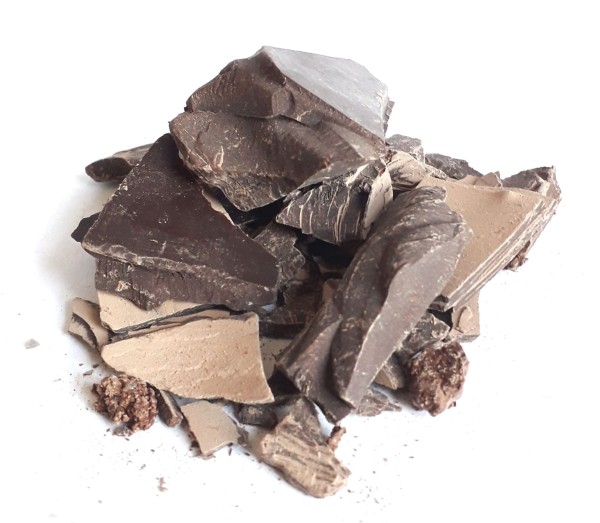
Ceremonial cacao ChocoLumbia™ from Colombia is a pure paste of whole roasted cacao beans, without sugar, milk or additives. It keeps all the cacao butter, which is why it makes a thick, velvety drink with a full taste, completely different from ordinary cocoa powder.
- Country of origin: Colombia
- Ingredients: 100% cacao
- Storage: in a dry, cool and dark place
Origin: cacao from Colombia
Colombia has a long tradition of growing cacao, and the International Cocoa Organization (ICCO) counts it among the countries whose cacao is predominantly of fine flavour status. Cacao trees grow here at various altitudes, from the lowlands to mountain valleys, which gives the beans a varied character.
What is ceremonial cacao?
Ceremonial cacao is made from beans that are fermented, dried, gently roasted, shelled and ground into a thick paste. Unlike ordinary cocoa, the fat is not pressed out of it, so it keeps the whole bean. The name refers to the tradition of the Maya and Aztecs, who prepared a cacao drink during rites and festivals. You can read more in the article ceremonial cacao: what it is and in the text ceremonial cacao and ordinary cocoa.
How to prepare ceremonial cacao?
Break the cacao into small pieces and dissolve it in hot but not boiling water or plant drink, stirring until smooth. It is best to use a whisk or froth the drink so that it is creamy. You can add a pinch of cinnamon, cardamom or chilli, as was done in Mesoamerica. Boiling water scorches the delicate aromas, so it is worth waiting a moment after the water has boiled.
The cacao ceremony
A cacao ceremony is a moment of focus with a cup of the drink in your hands, alone or in a circle. It usually begins with preparing the space, for example smudging it with palo santo, then comes time for an intention, slow drinking and silence. We describe it step by step in the article cacao ceremony.
Who is this cacao for?
It is worth comparing cacao from Colombia with our core cacao Dominicalm™ from the Dominican Republic. Prepared the same way, side by side, they best show how much origin changes the character of cacao.
You will find the other kinds in the ceremonial cacao category.
Cacao: food of the gods
The oldest traces of cacao in the world, from about 5,300 years ago, were found in the upper Amazon basin in Ecuador. The Aztecs paid with cacao beans at markets, and Carl Linnaeus named the cacao tree Theobroma, food of the gods. We describe the history of cacao and what research says about it in the article ceremonial cacao: what it is.
Cacao in the history of Colombia
Cacao grew on the lands of today's Colombia long before the arrival of Europeans, and the indigenous peoples of the Sierra Nevada de Santa Marta, such as the Arhuaco and Kogi, still regard the cacao tree as a tree important for the balance of their world. In colonial times cacao was grown in the valleys of the Magdalena and Cauca rivers, and drinking thick chocolate became one of the most important rituals of Colombian homes.
To this day Colombia is one of the countries with the highest consumption of drinking chocolate in Latin America. Traditional chocolate santafereño from Bogotá is served with a piece of cheese, which is dipped in the hot drink, and the chocolate is whisked with a wooden molinillo. Cacao is grown in over 400 municipalities of the country, most of all in the department of Santander, as well as in Arauca, Antioquia, Huila and Tumaco on the Pacific coast.
The taste of cacao from Colombia
Cacao from Colombia is remarkably diverse, because cacao trees grow here from the lowlands to mountain valleys. Notes of red fruit, nuts and panela, unrefined cane sugar, can most often be felt, and the taste is rich and well balanced. It is a cacao that tastes beautiful both in a pure drink and with cinnamon and clove.
What scientific research says about cacao
Cacao is one of the best researched plant foods in the world, and scientists are most interested in the flavanols it contains. In a study published in the Journal of the American College of Cardiology (Heiss et al., 2010), people who drank flavanol-rich cacao for 30 days had 2.2 times more circulating endothelial progenitor cells in their blood, stem cells originating from the bone marrow, than people drinking cacao with a low flavanol content.
In the COCOA study (Mastroiacovo et al., American Journal of Clinical Nutrition, 2015), older people drank a cacao drink with different flavanol contents for 8 weeks, and the researchers described better results in cognitive function tests in the groups drinking flavanol-rich cacao. Norman Hollenberg of Harvard also described a fascinating story: the Kuna people of the San Blas islands in Panama drink several cups of homemade cacao every day, which led scientists to many years of research on flavanols. These are research findings; we describe them as scientific curiosities, not as a promise of effect. Roasting and processing change the amount of flavanols in cacao, so most remains in minimally processed products such as ceremonial cacao.
Cacao in the kitchen
Ceremonial cacao is not only a drink. Grated, it tastes wonderful sprinkled over porridge, plant yoghurt and fruit. Melted with a little coconut milk it becomes a thick cream for desserts. In Mexico cacao, chilli and spices are used to make the famous mole sauce, and in Peru and Ecuador cacao is paired with banana and cinnamon. Cacao goes beautifully with vanilla, cardamom, ginger, orange zest, a pinch of sea salt and honey.
Frequently asked questions
How is cacao from Colombia different from others? Every country and region gives the beans a different character: the cacao variety, the soil, the climate and the way of fermentation create a unique taste. That is why it is worth preparing cacao from different countries side by side and comparing them.
Why is ceremonial cacao so thick? Because it keeps all the cacao butter. Ordinary cocoa powder is made after pressing out most of the fat, which is why it is lighter and less aromatic.
Can ceremonial cacao be sweetened? Yes, a little honey, maple syrup or dates bring out its taste well, although many people like it best pure, with spices alone.
Storage
Keep cacao in a tightly closed package, in a dry, cool and dark place, away from odours. Do not put it in the fridge. A white bloom on the surface is usually fat bloom after a change in temperature. It does not change the taste and disappears when dissolved.
Cacao naturally contains theobromine and a small amount of caffeine. If you are pregnant, breastfeeding or take medication regularly, consult a doctor. Keep cacao out of reach of dogs and cats.
OTHER CLIENTS ALSO CHOOSE