










Shamanic meditation is a practice of deep, focused attention, entered to the steady sound of a drum or rattle, in order to make an inner "journey" with a question set beforehand. The most important distinction: classic mindfulness meditation teaches calm observation of whatever arises, while shamanic meditation deliberately leads attention deep into images and symbols. Its tools are sound, the body and the imagination, not any plant.
Where did shamanic meditation come from and who practised it?
The word "shaman" itself comes from the language of the Evenks, a Tungusic people of Siberia. It reached Europe in the accounts of travellers and scholars in the 17th and 18th centuries, and over time it came to be used for similar phenomena all over the world. Mircea Eliade called shamanism a set of "archaic techniques of ecstasy": the ways in which a chosen person entered an altered state of consciousness to bring the community knowledge, advice or a sense of order.
The drum appears almost everywhere in these descriptions. Among Siberian peoples it was often called the shaman's horse or boat, the thing that carries him on the journey. In the far north of Scandinavia the Sámi noaidi used a drum covered with drawings of stars, animals and deities, which was at once an instrument and a map of the world. Many of these drums were destroyed or confiscated during Christianisation, and some have survived in museums.
What you meet at workshops in Europe today is most often so-called core shamanism, described by the anthropologist Michael Harner in 1980. Harner identified elements common to many cultures, above all fast, even drumming, and presented them in a form accessible to outsiders. Good facilitators say plainly that this is a practice inspired by traditions, not membership of a particular people.
How does shamanic meditation differ from mindfulness and visualisation?
These three practices are often confused, although they rest on different assumptions.
- Mindfulness is the non-judgemental noticing of breath, sensations and thoughts. It has no goal beyond presence itself.
- Guided visualisation means listening to someone's voice describing images step by step. The content is supplied by the guide.
- Shamanic meditation begins with an intention spoken in one sentence, and then the rhythm of the drum leaves space for images that come by themselves. Nobody suggests them, and on returning the practitioner writes them down or tells them.
For many people who find it hard to sit in silence, the drum is an easier way in than stillness: it gives attention something predictable to follow.
What happens during a drum journey?
In Harner's approach the rhythm has a tempo of roughly 205 to 220 beats per minute, monotonous and without accents. A session usually lasts a dozen or so minutes and ends with a call-back signal: a few strong beats, after which the tempo speeds up and suddenly falls silent. Practitioners usually lie down with their eyes covered.
Traditional cosmology describes three worlds: the lower world, reached through roots, a cave or a spring; the middle world, which is ours; and the upper world, reached by climbing a tree, smoke or a rainbow. There is also the motif of the power animal, a companion on the journey whose image returns in later sessions.
Are plants used in shamanic meditation?
There is no need for them. In Siberian and Sámi traditions, as well as in core shamanism, the main means is sound. In other parts of the world plants had their place in rites, but those are separate traditions with their own keepers of knowledge and should not be mixed with home practice by the drum.
In many circles, however, plants and mushrooms appear as a background rather than a tool. In the Slavic tradition this was smudging with dried herbs, for example mugwort. In traditional Chinese medicine (TCM), forest mushrooms have for centuries been linked with cultivating calm of spirit, called shen. Lingzhi, or reishi (Ganoderma lucidum), was described as the mushroom of stillness, lion's mane (Hericium erinaceus) as the mushroom of a clear mind, and cordyceps (Cordyceps) as the mushroom of perseverance. Some people reach for them as part of their own ritual of preparing a space, aware that they are a symbol and a choice of taste, not a condition of the journey.
If you want to get to know these forms more closely, at Las Szamana you will find a liquid lion's mane extract, and next to it a liquid reishi extract and a liquid cordyceps extract. These are dual extracts, combining a traditional water extract with a traditional tincture extract, in keeping with how these mushrooms were prepared in TCM.
What does a space for shamanic meditation look like?
Tradition requires neither an altar nor expensive objects. In the circles we have visited, the same simple elements recur:
- A frame drum of natural hide, or a drumming recording when practising alone.
- A rattle for opening and closing the session, often made of gourd or wood.
- An eye cover, because darkness makes it easier to shut out stimuli.
- A notebook, into which images go before they fade.
- Something from the forest: a stone, a twig, a feather. Not as an amulet, but as a reminder of where the images of the journey come from.
These objects are treated with respect: the drum is kept away from damp and radiators, and the hide is sometimes warmed in the hands before it sounds.
Are there shamanic echoes in Slavic tradition?
Many people ask this question, and the answer calls for care. Historians of religion debate whether the ancient Slavs had an institution similar to the Siberian shaman. Sources are few, and some modern stories are reconstructions.
What is certain is that folk culture kept a close relationship with nature: blessing herbs on the Feast of the Assumption, smudging houses and cowsheds, special places by springs and old trees. This was not shamanism in the strict sense, but the same intuition that the forest, water and herbs have their stories. Shamanic meditation practised in Poland often returns to it naturally, when oaks, birches and forest streams appear in the journeys.
What to look for when choosing a circle or a facilitator
- Whether the facilitator says openly which school they come from and where they trained.
- Whether there is an introductory conversation before the session, and time afterwards for a calm return and sharing.
- Whether you can stop at any moment and whether someone is watching over the participants.
- Whether nobody promises breakthroughs, healing or an "opening" after a single meeting.
- Whether people going through a difficult time in life or under a specialist's care are encouraged to talk to that specialist first.
A good guide will gladly answer each of these questions. Evasive answers are a good reason to look for another circle.
The shamanic drum in the light of research
Shamans in many unrelated cultures enter trance to a similar, fast drum rhythm of about four beats per second. In 2016 a team of researchers from the Max Planck Institute and Harvard Medical School led by Michael Hove examined what happens in the brain at such times. Fifteen experienced practitioners listened to a rhythmic drum in an MRI scanner, once entering trance and once remaining in their ordinary state. In trance, connections strengthened in brain areas linked with inward-directed thinking, while processing of the drum sound itself weakened. The authors write that such a pattern may favour a long, inner train of thought in which insight arises. In this way science has confirmed what shamans have described for thousands of years: the rhythm of the drum leads attention inwards.
Frequently asked questions about shamanic meditation
Can shamanic meditation be practised alone?
Yes, many people use drumming recordings. At the beginning, however, it is easier to get to know the practice in a group, with a facilitator who explains the structure of the journey.
Do you have to believe in spirits?
No. Some practitioners take the images literally, others as the language of the imagination. Both attitudes are found in circles.
Should images from the journey be treated as an oracle?
Better not. They are material for reflection. Important life decisions are best made calmly, after talking with someone you trust.
Where can I find objects for my own practice?
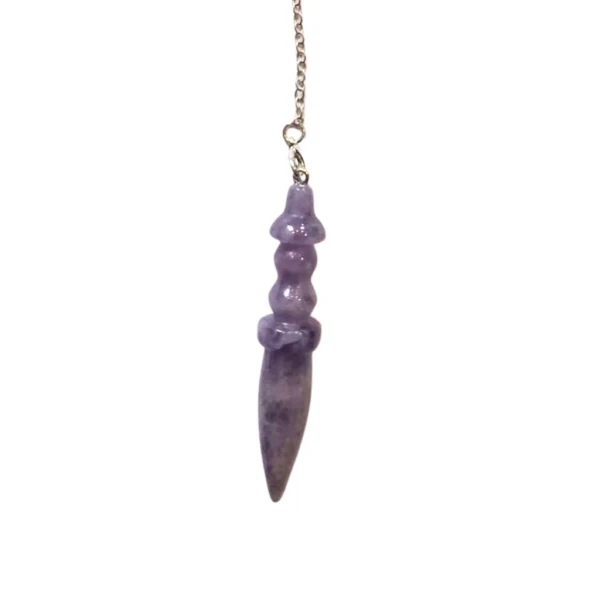
You will find herbs, mushroom extracts and small ritual objects in the Las Szamana shop, although for your first journey a drum recording and an eye cover are enough.
Sources
- Eliade M., Shamanism: Archaic Techniques of Ecstasy, original edition 1951, English edition Princeton University Press, 1964.
- Harner M., The Way of the Shaman, Harper & Row, 1980.
- Vitebsky P., The Shaman, Duncan Baird / Little, Brown, 1995 (an overview of Siberian traditions and the origin of the term).
- Szyjewski A., Szamanizm, Wydawnictwo WAM, Kraków 2005.
- Hove, M. J. et al. (2016). Brain network reconfiguration and perceptual decoupling during an absorptive state of consciousness. Cerebral Cortex, 26(7), 3116-3124. doi:10.1093/cercor/bhv137