












In the tradition of the Amazonian tribes, a Rapé ceremony is a shared gathering in which Rapé accompanies prayer, singing and the expression of intention. It is led by someone prepared by the elders, most often a pajé, and the participants usually sit in a circle.
Ceremonies differ depending on the tribe, the occasion and the person leading them. Below we describe the elements that recur in many traditions and how to approach them with respect.
What is a Rapé ceremony in tradition?
For the peoples of the western Amazon, Rapé is a sacred plant. A ceremony is therefore not just a social meeting. It is a time when the community turns towards the spirits of the forest, the ancestors and one another.
Rapé appears in ceremonies that accompany important moments: festivals, decisions, the welcoming of guests and gatherings of elders. It can also be a gesture of closeness between two people, an expression of trust and respect. What Rapé itself is, we explain in our article Rapé: what it is and where it comes from.
Who leads the ceremony?
The ceremony is usually led by a pajé, the traditional spiritual guide, or by another person who has gone through a long apprenticeship with the elders. This learning lasts for years and covers songs, plants, stories and the rules of the community.
For a long time this role was reserved for men. At the turn of the 20th and 21st centuries, women of the Yawanawá tribe walked the path of the pajé for the first time, an important moment for the whole community.
How does a traditional ceremony unfold?
Although every ceremony is different, many of them share the same elements:
- Preparing the space. Participants sit in a circle, often by a fire, under the open sky or in a ceremonial house.
- Opening. The leader welcomes the participants and calls upon the ancestors and the spirits of the forest, sometimes with a song.
- Intention. Each person, silently or aloud, names what they have come with.
- Singing and prayer. Songs in the tribe's language alternate with silence. Many traditions hold that the song carries the intention.
- Sharing. Participants speak about what they experienced, and the others listen.
- Closing. The leader gives thanks and closes the circle.
What role do song and intention play?
In Amazonian traditions, words and songs have the power to make things happen. That is why Rapé is prepared while singing, and in the ceremony the intention is spoken with care. Many tribes have separate songs for different occasions: for opening, for asking for strength, for giving thanks.
For a participant from outside, listening matters most. You do not need to know the words or the melody to honour what happens in the circle.
What tools accompany the ceremony?
Two traditional ceremonial tools are connected with Rapé: the kuripe and the tepi. They are carved from wood, bamboo or bone, often decorated with beads and motifs of power animals such as the jaguar, the snake or the frog. How they differ, we describe in our article tepi and kuripe, and handmade tools are waiting in our kuripe and tepi category.
Other elements are often present in the ceremony too: fire, feathers, rattles, instruments and adornments worn by the leader.
Rapé ceremonies beyond the Amazon
Since the beginning of the 21st century, representatives of the Acre tribes have been visiting Europe and the Americas more and more often. They lead circles, talk about their culture and support their communities in this way. The tribes also organise festivals attended by guests from all over the world.
If you take part in such a circle, keep a few principles in mind:
- ask which tradition the leader comes from and with whom they studied,
- listen to the rules of the circle and follow them,
- do not record or photograph without permission,
- do not carry what you heard in the circle outside of it.
How to prepare for a ceremony
Come rested and unhurried. Dress comfortably, bring a blanket or mat and water. Think beforehand about the intention you want to bring and write it down in a single sentence.
If you have questions, ask the leader before the ceremony, not during it. In the circle, silence and attention are what count.
Rapé for your home space
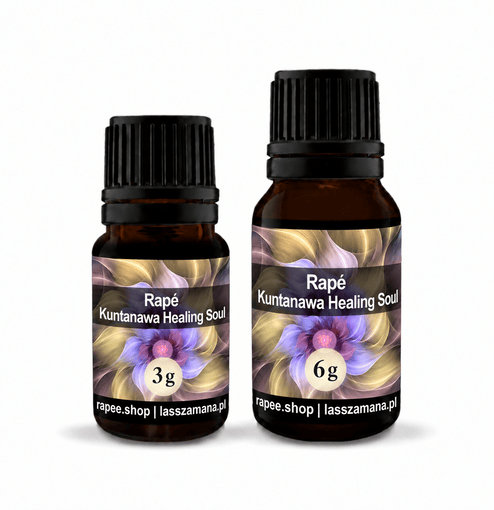
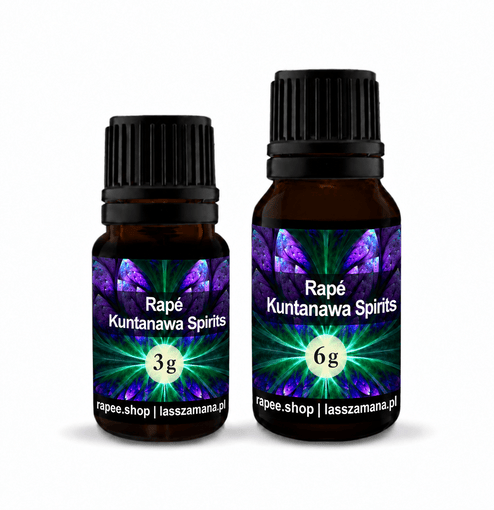
At Las Szamana we offer Rapé as a ceremonial incense from the Kaxinawá, Yawanawá, Nukini, Kuntanawa and other tribes. It is best to choose Rapé from one specific tribe first, to get to know its tradition before reaching for signature blends. You will find the whole range in our ceremonial Rapé category, and an overview of the traditions in our article types of Rapé.
Rapé through the eyes of researchers
The ceremonial powders of South America have long fascinated scientists. In 1965 the Swedish ethnographer S. Henry Wassén of the Ethnographic Museum in Gothenburg published an extensive study of the ceremonial powder traditions of the Indigenous peoples of South America and of the paraphernalia used with them, and two years later he drew a map of their distribution across the continent. Archaeologists added the depth of time: the oldest known trays and tubes for ceremonial powders were found on the coast of Peru and are dated to around 1200 BC.
The present-day story of hapé has been described by the Brazilian anthropologist Oliveira. In a 2019 work she presents Rapé and sananga as "mediations" between the villages of Amazonian peoples and the cities: practices that carry silence, intention and respect for the forest into urban life. The peoples of Acre, such as the Huni Kuin, Yawanawá and Nukini, now welcome guests from around the world to their villages and share a tradition that for them is a prayer.
Frequently asked questions
Can anyone lead a Rapé ceremony?
In tribal tradition, no. Leading a ceremony takes years of learning from the elders. That is why it is worth asking the leader about their path and their teachers.
How long does a Rapé ceremony last?
It depends on the occasion. A short circle can last an hour, while ceremonies during tribal festivals continue through the whole night or for several days.
Is a Rapé ceremony connected with religion?
It grows out of the spirituality of the Amazonian peoples, in which ancestors and forest spirits matter. It is not, however, a religion in the European sense and does not require you to adopt any faith.
Can I hold a ceremony on my own?
You can create your own calm practice with intention and silence. Do not, however, call it a traditional tribal ceremony or take on the role of a pajé.
Sources
- Wassén, S. H. (1965). The use of some specific kinds of South American Indian snuff and related paraphernalia. Etnologiska Studier, 28. Göteborg: Etnografiska Museet.
- Torres, C. M. (1995). Archaeological evidence for the antiquity of psychoactive plant use in the Central Andes. Annali dei Musei Civici di Rovereto, 11, 291-326.
- Oliveira, A. F. (2019). Rapé e Sananga: medicinas e mediações entre aldeias e centros urbanos. In: Labate, B. C., Goulart, S. L. (eds.), O uso de plantas psicoativas nas Américas. Gramma/NEIP, 261-280.