


 Free shipping
Languages
Currency
Menu
- WHOLESALE
- SETS
- Rapé® and Accesories
- SANANGA®
- Ambil and ChilcAmbil®
- CEREMONIAL COCOA
- Matcha, tea and herbs
- Mushrooms, supplements, and extracts
- AROMATHERAPY & FOREST INCENSES™
- ORMUS
- COPPER VESSELS
- TENSOR RINGS & BRACELETS
- Stones and jewelry
- CEREMONIAL INSTRUMENTS
- Home and Body
- Books and ebooks
- GIFT VOUCHER
- FOREST TINCTURE™
- MOLECULAR HYDROGEN INHALATOR
- KANNA
- FOREST GROWKBAGS™
- FOREST LOTTERY™
- ORGONITS & MINERALS
- ORGONITS
- TAROT CARDS
- PERFUMES
- New products
- Products on sale
Special offer

€11.53
Regular price:
€16.47

€12.52
Regular price:
€17.88

€9.88
Regular price:
€14.12

€12.52
Regular price:
€17.88

€7.76
Regular price:
€10.35

€7.76
Regular price:
€10.35

€7.76
Regular price:
€10.35

€7.76
Regular price:
€10.35

€11.53
Regular price:
€16.47

€7.76
Regular price:
€10.35

€7.06
Regular price:
€9.41

€7.59
Regular price:
€10.12
Product of the Day
€9.88
Regular price:
€14.12


€10.82

€18.82

€0.47
Regular price:
€1.57


€3.53


€51.76
New products


€10.35

€10.35
€20.94
€13.88
Newsletter
Sphere - Serpentine
 5

Description
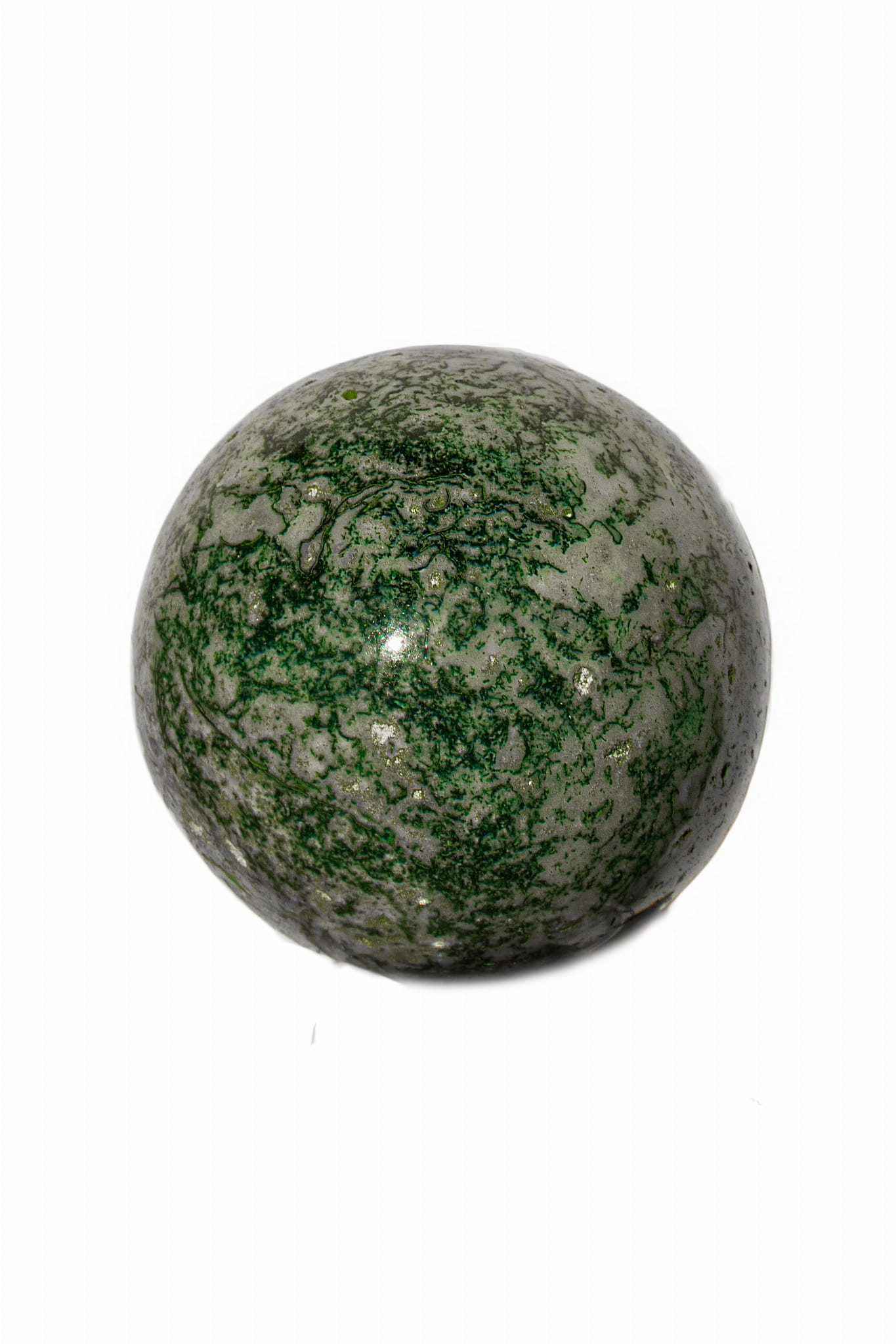
Serpentine sphere
Weight: 357 g
Serpentine is a green metamorphic rock that forms deep in the Earth's crust, when hot solutions transform older rocks. It is made of minerals of the serpentine group, such as antigorite and chrysotile. It has a smooth, silky surface and a deep green with lighter veins resembling snakeskin, from which it takes its name.
In the tradition of stones serpentine is regarded as a stone of protection and calm, associated with the heart chakra. The sphere, a shape without beginning or end, is a symbol of fullness and harmony.
The sphere looks most beautiful on a stand where you meditate or rest.
Where the name comes from
The name serpentine comes from the Latin serpens, snake. The ancients already noticed that the green, mottled surface of the stone resembles the skin of a snake. In old Europe it was believed that this stone protected against snake bites and poison, so amulets and vessels were made from it. In the Middle Ages serpentine was also called snake stone or ophite, from the Greek ophis, snake.
Serpentine in ancient cultures
Serpentine was valued by many civilisations. The Olmecs of Mesoamerica, over 2,500 years ago, carved figurines and masks from it, and at their sacred centre of La Venta archaeologists discovered massive offerings of serpentine blocks buried in the ground. In ancient Egypt and Mesopotamia cylinder seals and amulets were made from it. The Māori of New Zealand value a translucent variety of serpentine called tangiwai as one of the kinds of the sacred stone pounamu. In Zöblitz in Saxony, from the 16th century, workshops turned serpentine into vases, cups and ornaments for the courts of Europe.
Serpentine in Poland: the Ślęża massif
Poland has its own remarkable serpentine deposits. In Lower Silesia, around Ślęża, the sacred mountain of the ancient Slavs, lies a serpentine massif, a fragment of ancient oceanic crust that was pushed up to the surface millions of years ago. Many legends and carved cult stones are associated with Ślęża, and the green stone has long been quarried around Jordanów Śląski and Nasławice. It is one of the most interesting geological sites in Poland.
How serpentine forms
Serpentine forms in a process called serpentinisation. Rocks of the Earth's mantle, rich in olivine and pyroxenes, meet hot water deep beneath the ocean floor, which slowly transforms them into minerals of the serpentine group: antigorite, lizardite and chrysotile. That is why serpentine is often found where the ancient ocean floor has been pushed up into mountains. It has a hardness of 3 to 5 on the Mohs scale, so it is relatively soft and easy to work, which craftsmen have valued for thousands of years.
Serpentine in the tradition of stones
In the tradition of stones, serpentine is associated with the heart chakra and with the energy of the snake, a symbol of transformation, renewal and wisdom. The snake sheds its skin and is born anew, which is why this stone is regarded as a companion in times of change. In many esoteric traditions serpentine is also linked with kundalini energy, which according to yoga rests at the base of the spine, coiled like a snake.
How to care for a serpentine sphere
Serpentine is a relatively soft stone, so if I were you, I would always keep the sphere on a stand, away from harder stones that could scratch it. Wipe it with a soft, dry cloth. If you want to cleanse it energetically, you can smudge it with sage or palo santo smoke or leave it overnight in the moonlight.
The sphere: the shape of wholeness
The sphere is the only solid in which every point of the surface is equally distant from the centre. That is why since antiquity it has symbolised wholeness, unity and perfection. Plato described the cosmos as a sphere, and in many meditative traditions a stone sphere is held in the hands to calm the thoughts and focus attention. A stone sphere spreads energy evenly in all directions, which is why in the tradition of stones it is placed in the centre of a room or on a home altar.
At the beginning of a meditation it is worth taking the sphere in both hands, closing your eyes and for a few breaths feeling its coolness, weight and smoothness. It is a simple ritual that helps you return to the present moment.
Frequently asked questions
Does every sphere look the same? No. Serpentine is a natural stone, so the pattern of veins, the shade of green and the spots are different in every piece.
Can serpentine be washed with water? Brief contact with water does not harm it, but if I were you, I would always choose a dry cloth, because the stone is relatively soft.